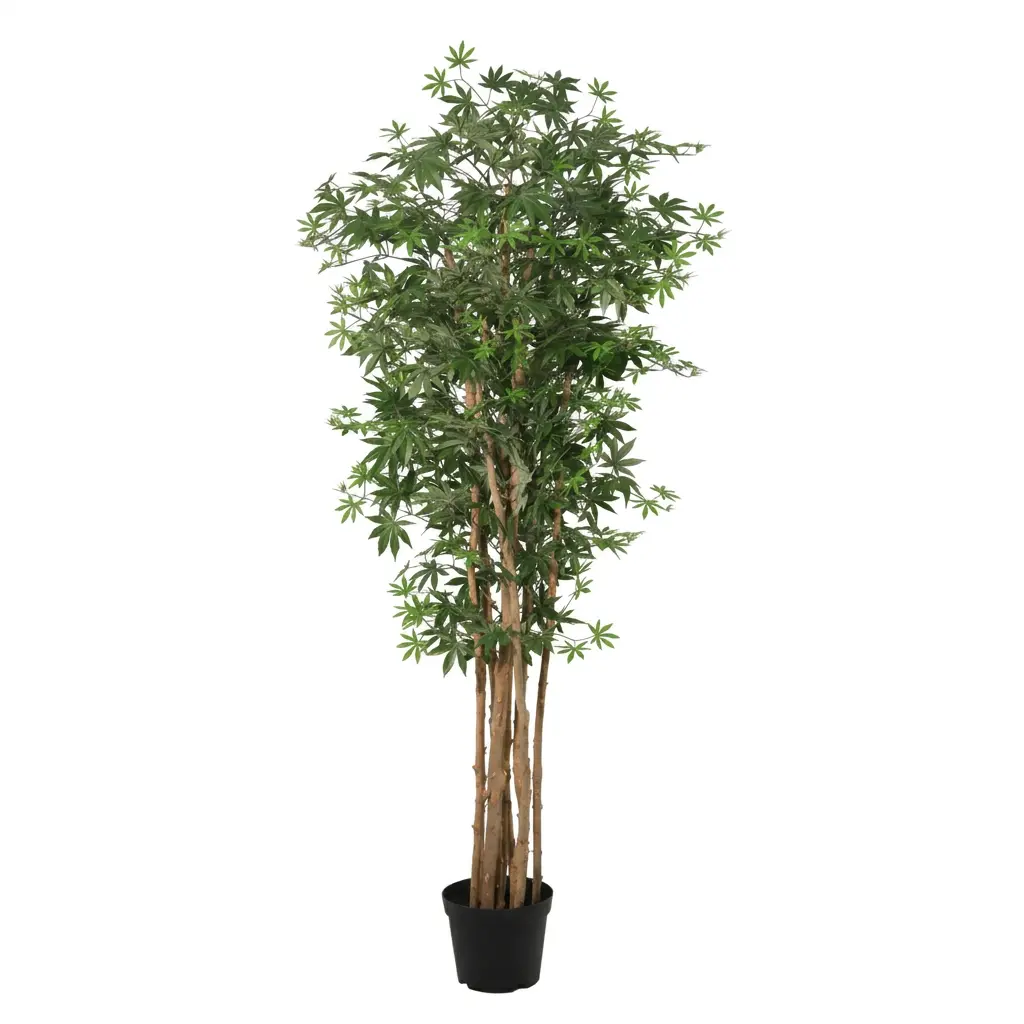
The artificial Acer palmatum, commonly known as Japanese maple, is a slender tree with layered branching and finely divided, palmate leaves. Its silhouette is open and airy, with a pronounced horizontal growth habit characteristic of the species. The tree is supplied with a pot, sized to match the chosen height.
The Japanese maple suits lobbies, hotel corridors, showrooms and waiting areas where a botanical accent is wanted without visual heaviness. The delicate branching gives each tree an individual character, so a series of several units across a space avoids a uniform or repetitive appearance.
As an artificial tree, it requires no watering, light or feeding. Occasional dusting is all the maintenance needed. Choose the height based on the clear ceiling height and the floor space available: the canopy spreads wider than the pot and needs room around it. Orders can be placed for a single unit or in larger quantities for a project, and each order is carefully packed and dispatched as a whole.
Is this artificial tree suitable for indoor use? Yes, the tree is intended for interior use. The fine leaves and open branching work best in a sheltered environment such as a lobby, corridor or showroom, where the silhouette can be appreciated without exposure to the elements.
How much maintenance does an artificial tree like this require? Very little. As an artificial tree it needs no watering, light or feeding. Occasional dusting with a dry cloth or soft brush is enough to keep it looking well-maintained over time.
How do I choose the right size for my space? Base your choice on the clear ceiling height and the floor area available around the position. The canopy spreads wider than the pot, so allow horizontal space as well. Available heights range from 100 to 180 cm.
Can I order multiple units for a project? Yes, orders can be placed for a single unit or in larger quantities. For project orders, all units are carefully packed and dispatched together as one shipment, so everything arrives at the location at the same time.
How realistic does this tree look up close? The finely cut, palmate leaves and layered branch structure closely follow the natural growth habit of the species. The open, airy form means the tree holds up to close inspection and reads as botanical rather than decorative.